Preschool Worksheets for Ages 3 to 4
Short, simple worksheets for children who are just starting to hold a pencil: lines, names, shapes, cutting, counting and first sounds.
What preschoolers are ready for
Between about three and four, children are building the hand strength and control that writing needs later. Most can scribble with purpose, copy a straight line and a circle, count a few objects and recognize the first letter of their own name. This is also the age of nursery in the UK. The best worksheets for this stage are short, big and friendly, because a three-year-old has a short attention span and small hands.
How to use this page
Choose by skill rather than by worksheet. If your child is not yet holding a pencil comfortably, start with the pencil control and cutting tools. If they love their own name, begin with name tracing. Each tool below opens a worksheet that is already set to a preschool level, with big letters, few items and plenty of space. You can change every setting before you print.
Pencil control and hand skills
Straight lines, curves, shapes and cutting get small hands ready for writing.
Names, letters and first sounds
Start with their own name, then letter shapes and the sounds letters make.
Numbers and counting
Big, simple numbers for children who can count a few objects.
Looking and matching
Puzzles that train careful looking, with big pictures and few pairs.
Free printable workbooks for preschool worksheets
Complete PDF books, planned in small steps, that suit this age group.
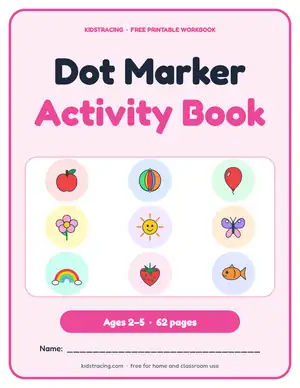
Dot Marker Activity Book
Big letters, numbers, shapes and pictures filled with circles for dot markers, stickers or fingertips.
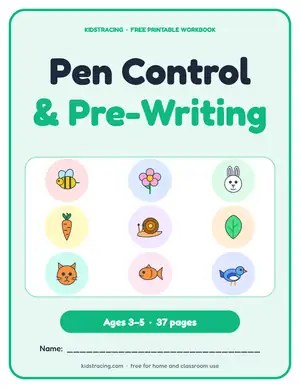
Pen Control and Pre-Writing Book
Lines, curves, zigzags, loops and spirals, plus paths from a bee to a flower, to build pencil control.
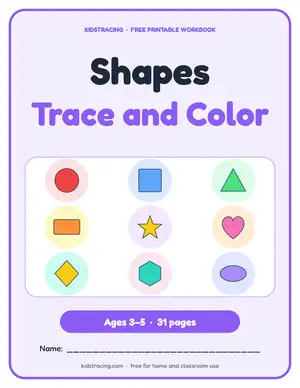
Shapes Tracing and Coloring Book
Ten shapes to trace, hunt for and color, plus tracing practice and matching games.
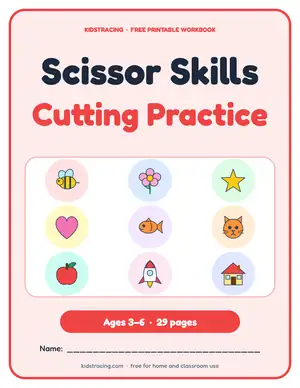
Scissor Skills Cutting Practice Book
Cutting practice from first snips to zigzags, shapes and pictures to cut out and color.
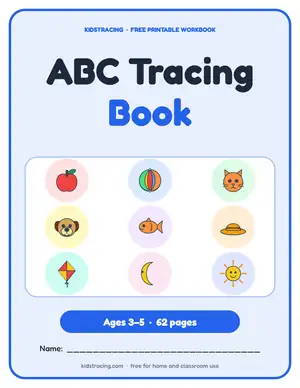
ABC Tracing Book
Every letter A to Z with numbered stroke arrows, a picture to color and a word to trace.
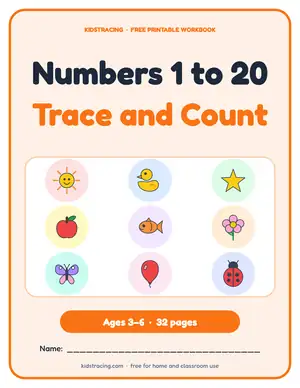
Number Tracing and Counting Book
Trace, count and color every number from 1 to 20, then practice number words and skip counting.
A simple week to try
- Monday: trace a few rows of lines with preschool line tracing.
- Tuesday: make a name tracing sheet and trace the first letter together.
- Wednesday: do a short shadow matching puzzle with four pairs.
- Thursday: count five objects, then trace the numbers on number tracing for preschool.
- Friday: practice snipping and straight lines with scissor skills.
Five to ten minutes a day is plenty. Skip a day whenever your child is tired or not interested.
When worksheets are not the answer
Young children learn most through play. Drawing in sand, squeezing play-dough, threading beads, building with blocks and painting with big brushes all build the same hand control as worksheets, and they are often more fun. Use worksheets as one small part of the day, and let your child stop when they have had enough.
Guides to read first
Not sure your child is ready? Go through the handwriting readiness checklist, then see when children can draw each shape in pre-writing shapes by age. Our guide on how to teach a child to use scissors goes with the cutting sheets, and the shadow matching activities guide has games to play away from the page. For a routine, see handwriting practice at home.
Frequently asked questions
How many worksheets should a preschooler do each day?
One short activity of five to ten minutes is enough for most three- and four-year-olds. It is better to stop while your child is still interested than to finish a whole page.
Should preschoolers learn to write letters?
Many children are ready to trace letters in their name by four, but there is no need to rush. Pencil control, cutting, shapes and counting come first, and they prepare the hand for writing.
What if my child does not want to sit and trace?
Try a different activity, such as cutting or matching, or work on a bigger scale, for example drawing lines with chalk outdoors. Make it a game, and try again a few days later.
Are these worksheets suitable for nursery in the UK?
Yes. They suit children of about three and four years old, which covers nursery in the UK and preschool in the US. Pages that mention Reception or Year 1 are for the following year.
More ways to browse
Looking for a different age? See Kindergarten Worksheets. Four- and five-year-olds (Pre-K or Reception) can mix worksheets from both pages.
Browse by skill: Handwriting and Tracing Worksheets for Kids · Number Worksheets for Kids · Phonics Worksheets for Kids · Shape Worksheets for Kids · Matching & Visual Thinking Worksheets · Fine Motor Skills Worksheets